



Surety Bond vs Bank Guarantee: Which Is Better for Contractors in India (2026)?
Surety bond or bank guarantee? Learn how surety bond insurance works in India, its types, cost, benefits and why contractors and MSMEs are switching in 2026.
If you are a contractor, builder or MSME bidding for government or private projects, you have probably faced this problem: your bank guarantee limit is used up, and the bank wants more margin money before issuing a new one. Since 2022, Indian contractors have a strong alternative — the surety bond. Here is a simple guide to how surety bonds work and how they compare with bank guarantees.
What Is a Surety Bond?
A surety bond is a guarantee issued by a general insurance company. It promises the project owner that the contractor will complete the work as per the contract. If the contractor fails, the insurer compensates the project owner and later recovers the amount from the contractor.
A surety bond involves three parties:
- Principal: the contractor who buys the bond
- Obligee: the project owner, such as NHAI or a government department
- Surety: the insurance company that issues the bond
Is Surety Bond Insurance Allowed in India?
Yes. IRDAI introduced the Surety Insurance Contracts Guidelines in January 2022, effective from 1 April 2022. Only registered general insurers can issue surety bonds in India. The Ministry of Finance has made insurance surety bonds equal to bank guarantees for all government procurement.
Types of Surety Bonds in India
- Bid Bond: guarantees the contractor will sign the contract if they win the tender
- Performance Bond: guarantees the work will be completed as per the contract
- Advance Payment Bond: protects the advance money paid to the contractor
- Retention Money Bond: replaces retention money held back by the project owner
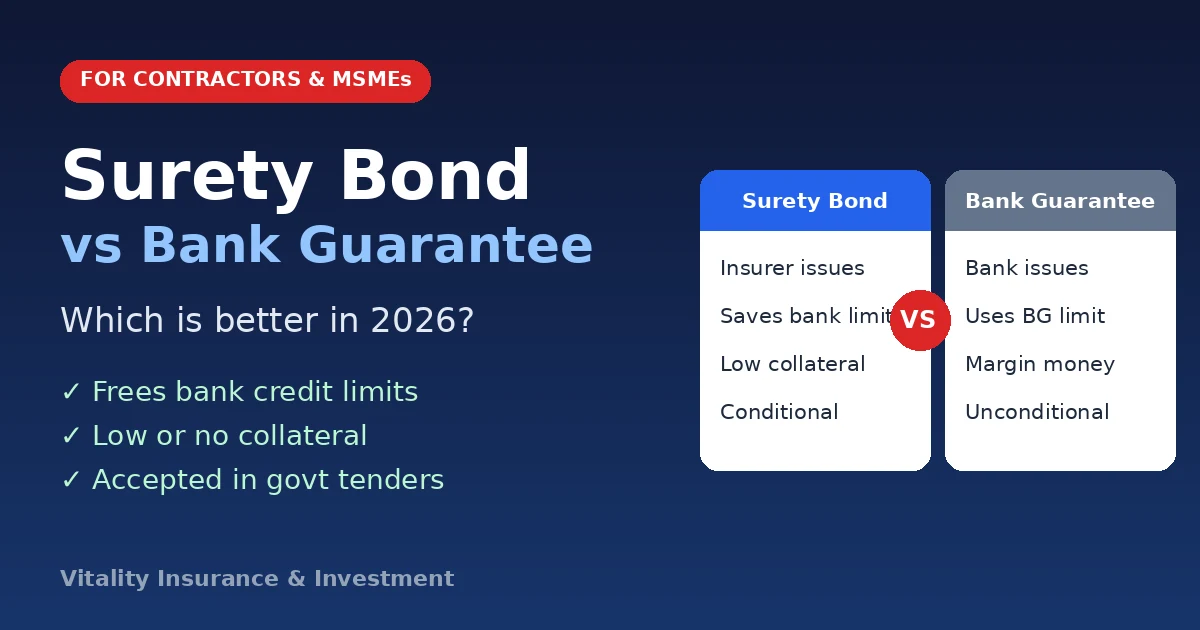
Surety Bond vs Bank Guarantee: Key Differences
Issuer
- Surety bond: issued by a general insurance company
- Bank guarantee: issued by a bank
Effect on credit limits
- Surety bond: does not use your bank working-capital limits
- Bank guarantee: uses your sanctioned non-fund-based limit
Collateral
- Surety bond: low or no collateral in most cases
- Bank guarantee: often needs fixed deposits or margin money
Payment
- Surety bond: usually paid after a default is verified
- Bank guarantee: usually unconditional, paid on demand
Benefits of Surety Bonds for Contractors
- Frees your bank limits for working capital and loans
- Reduces or removes the need for margin money
- Helps you bid for more projects at the same time
- Accepted by NHAI, the Ministry of Power and many government buyers
- The insurer's assessment improves your credibility in tenders
Where Surety Bonds Are Accepted
NHAI accepted India's first insurance surety bond in November 2023 and has since received bonds worth thousands of crores. The coal ministry allows surety bonds in place of bank guarantees, and in April 2026 the Ministry of Power accepted them for bid and performance security. Always check the tender document to confirm whether a surety bond is accepted.
How Much Does a Surety Bond Cost?
The premium depends on your company's financial strength, track record, project size and bond type. Some bonds have been issued at very low rates, while higher-risk cases cost more. Since there is usually little or no collateral, the total cost can be lower than a bank guarantee once blocked margin money is counted.
Who Issues Surety Bonds in India?
Leading general insurers offering surety bonds include Bajaj General, New India Assurance, SBI General, ICICI Lombard, HDFC ERGO, Tata AIG, Universal Sompo and IFFCO Tokio.
Things to Keep in Mind
- Insurers check your balance sheet, past projects and credit history
- Not every project owner accepts surety bonds yet
- Read the bond conditions, claim process and validity carefully
- Comparing quotes from several insurers can lower your premium
Frequently Asked Questions
Is a surety bond better than a bank guarantee?
For many contractors, yes, because it saves bank limits and needs less collateral. A bank guarantee may still be needed where the project owner does not accept surety bonds.
Who regulates surety bonds in India?
IRDAI regulates surety insurance, and only registered general insurance companies can issue it.
Can MSMEs get a surety bond?
Yes. MSMEs with sound financials and project experience can apply through an insurer or an insurance broker.
Is a surety bond the same as insurance?
No. Insurance protects you against your own losses. A surety bond protects the project owner if the contractor fails to perform.
Conclusion
Surety bonds are changing how Indian contractors fund their project guarantees. If your bank limits are holding back your growth, a surety bond could help you bid for more work without blocking your cash.
Planning to switch from bank guarantees? Contact Vitality Insurance & Investment to compare surety bond options from leading insurers.